“I want the teachers to know about...me.” - Zoe aged 5
“I want the teachers to know about...me.” - Zoe aged 5
"Story-dogs, because dogs are better than humans." - Max aged 9
"Story-dogs, because dogs are better than humans." - Max aged 9
“I think it is the first time someone has actually asked him what he wants.” - Parent
“I think it is the first time someone has actually asked him what he wants.” - Parent
Why Voice?
For the successful inclusion of disabled students into generalised schooling, the students them-selves must be consulted in the process of the provision of their reasonable adjustments (Healey et al., 2008; Ineson & Morris, n.d.; Plessis & Ewing, 2017).
What minimal research that has been conducted into student voice has shown us that reasonable adjustments or support mechanisms put in place without student consultation are often ill designed, socially isolating, or ignore the specific needs of the students (Mycock & Gowers, 2022; O’Rourke & Houghton, 2008).
VOLUME is a program designed specifically to enhance student voice, based on all of these principles.
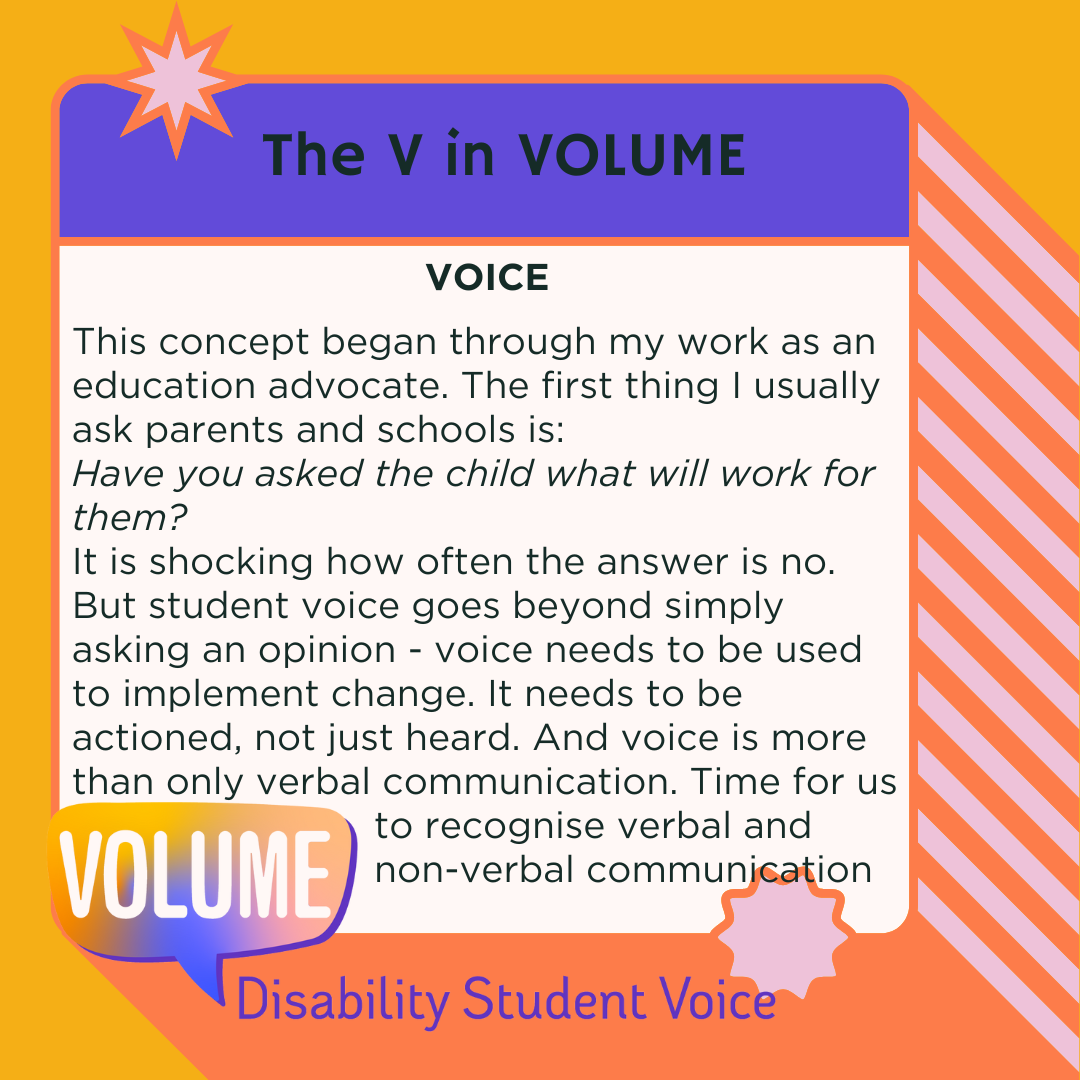
Genuine stakeholder voice is a necessary and important inclusion practice for the embracement of diversity (Brown, 2010; OSS, 2016; UNESCO, 2000). The importance of stakeholder voice is not a contemporary idea nor is it an illusionary concept out of reach of practical completion. Although The Voice to Parliament was unsuccessful, the belief that main stakeholders are entitled to have equal power in decision making about their own futures has long been fought in Australia (Mayo & O’Brien, 2023).
Why VOLUME?
The Activities
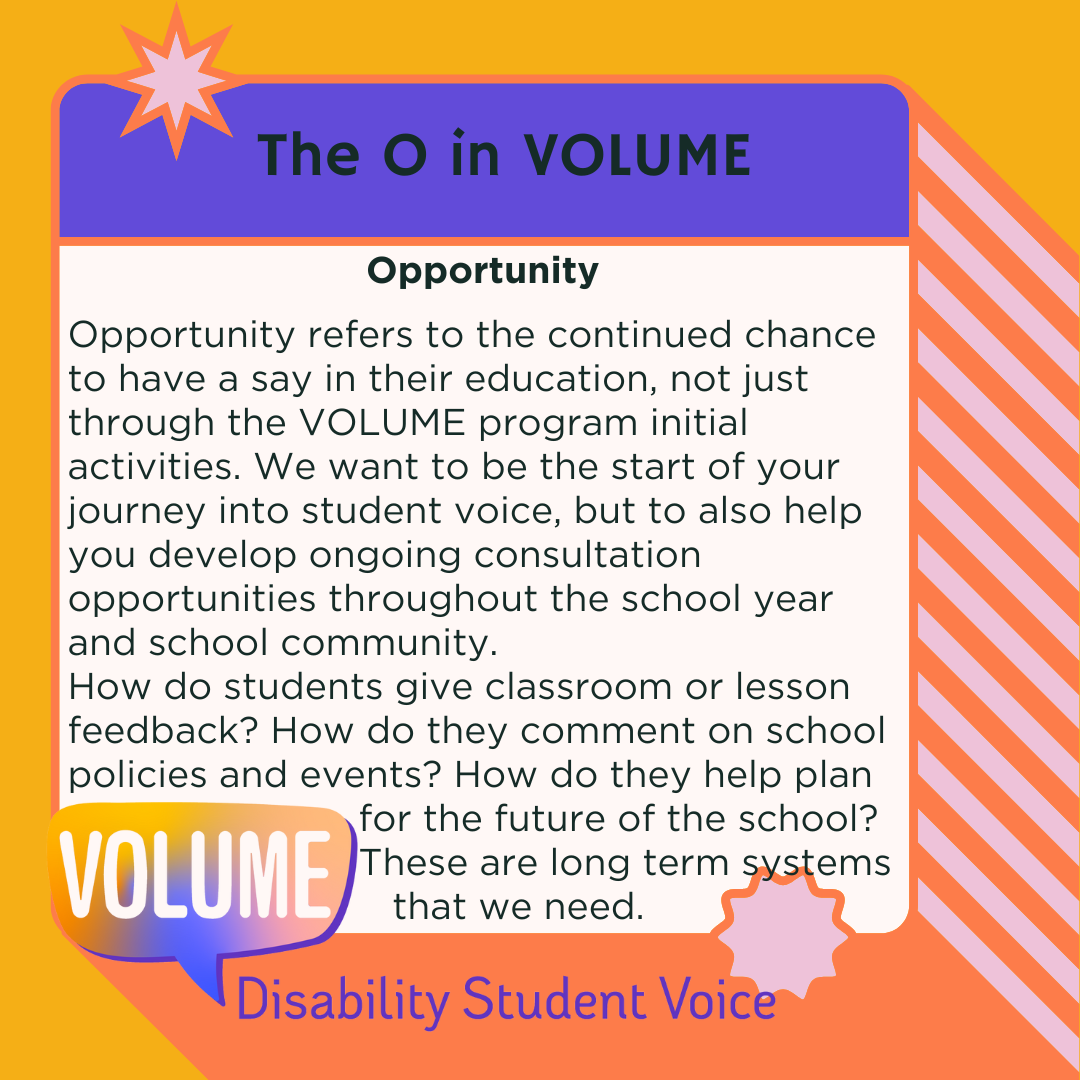
The 4 activities at the centre of the VOLUME program are designed to be engaging, play-based and follow the Universal Design for Learning principles and can be completed in a variety of ways, individually, in small groups or as a whole class. Short videos describing these activities can be found on the videos tab.
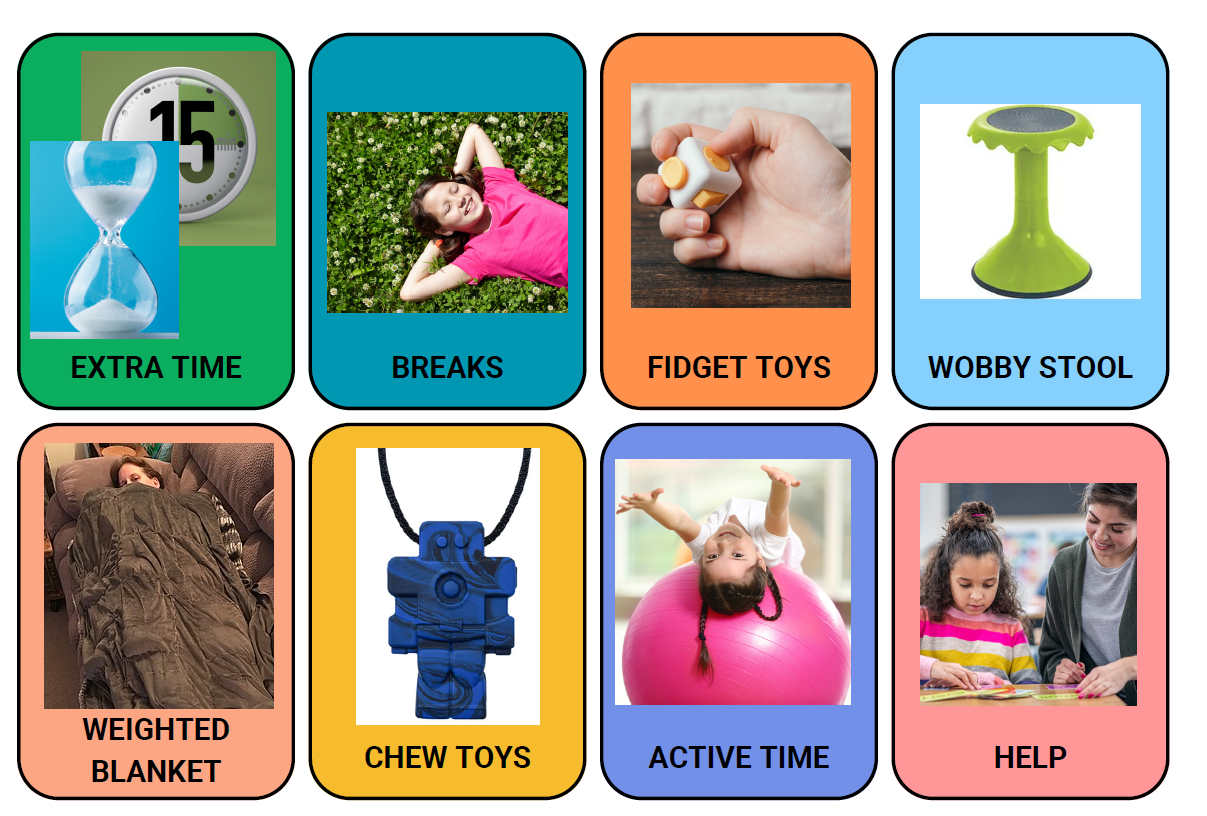
Card sorting is a non-verbal response task asking students to sort picture cards into three categories, likes, dislikes and unsure.
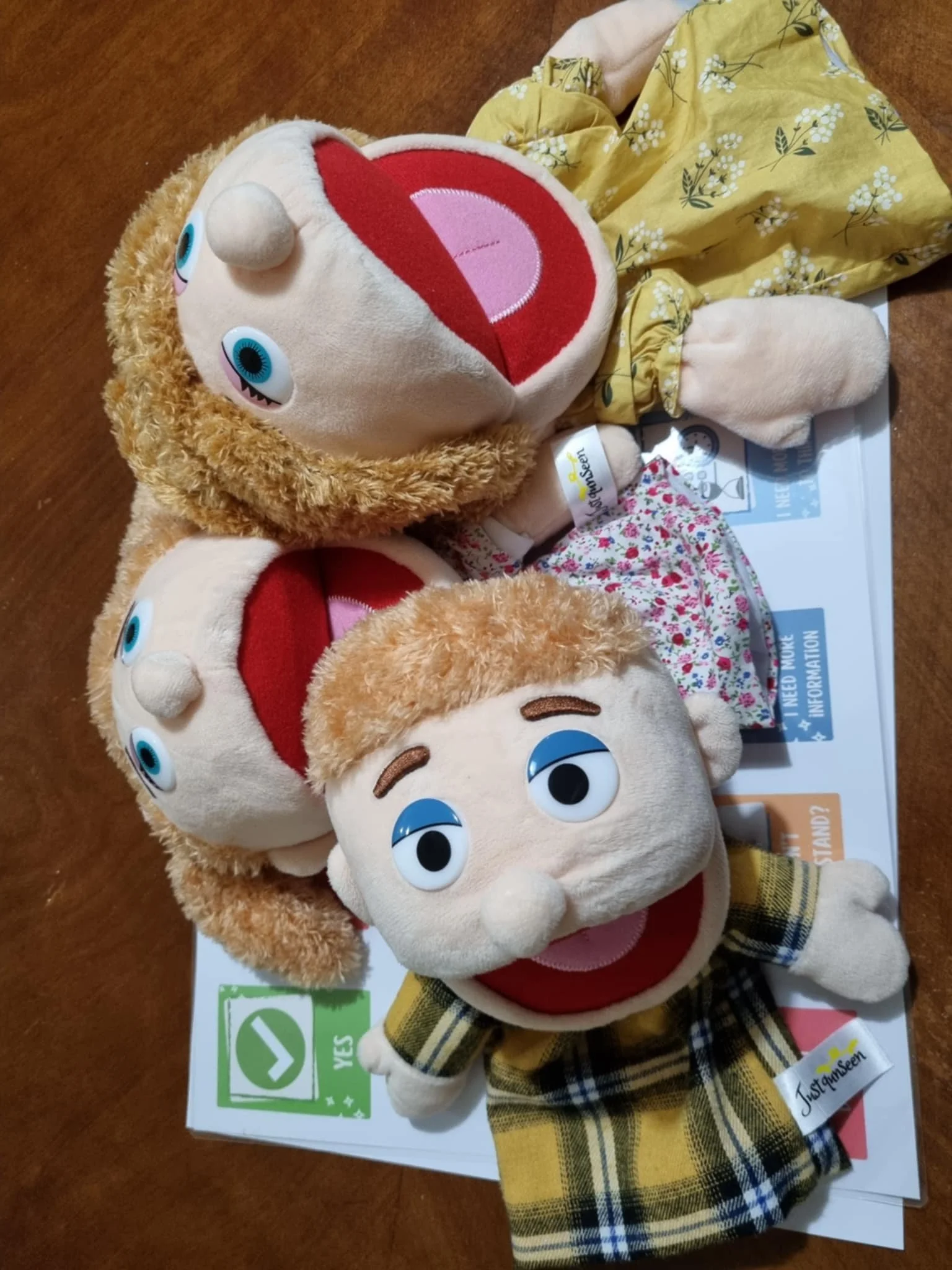
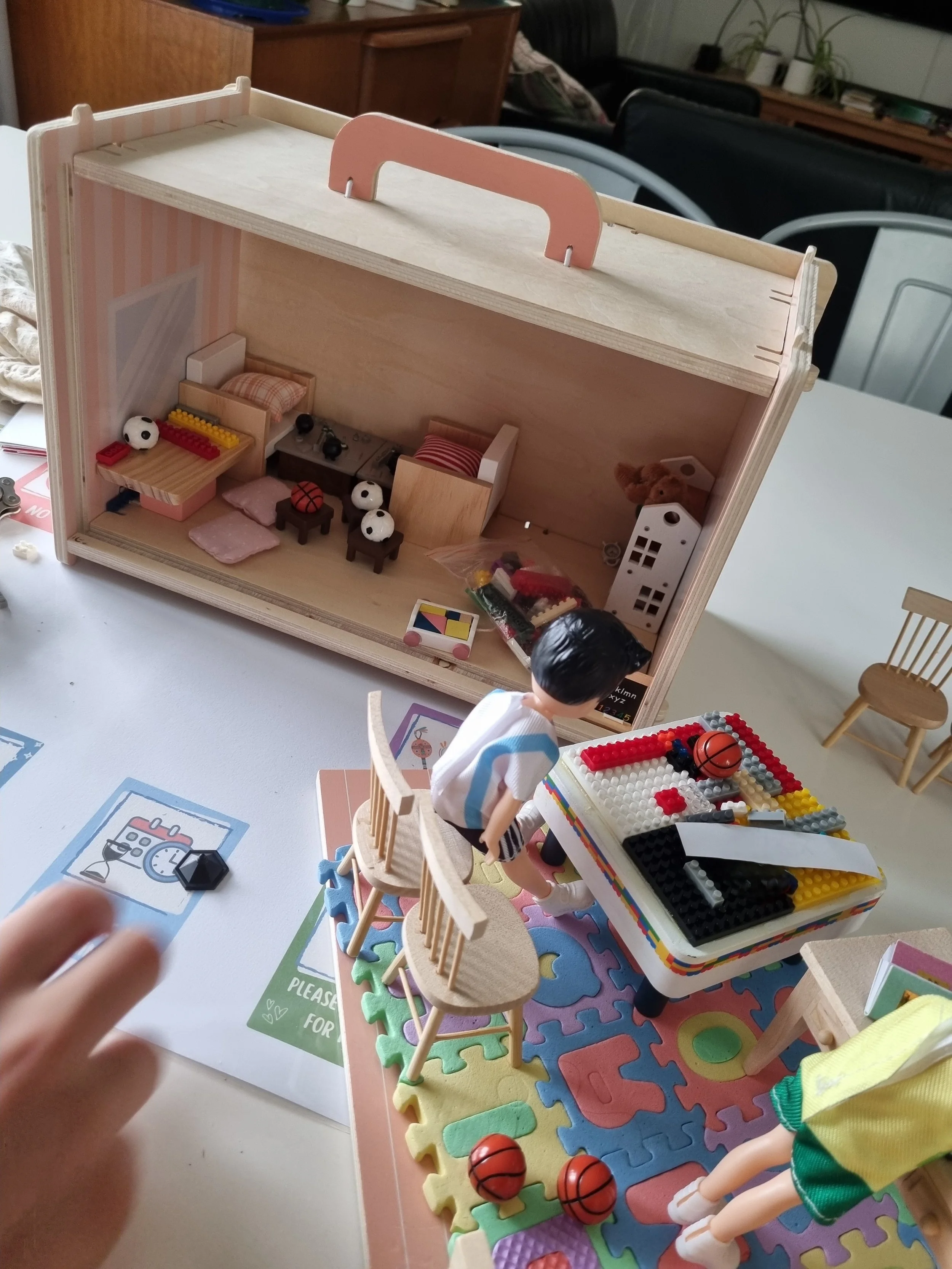
Small World Play/Puppets allows a 3D design of an ideal classroom in a low stakes recreational setting.
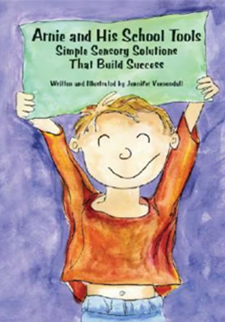
Picture book reading is a story sharing based on the book “Arnie and his School Tools” by Jennifer Veendendall.
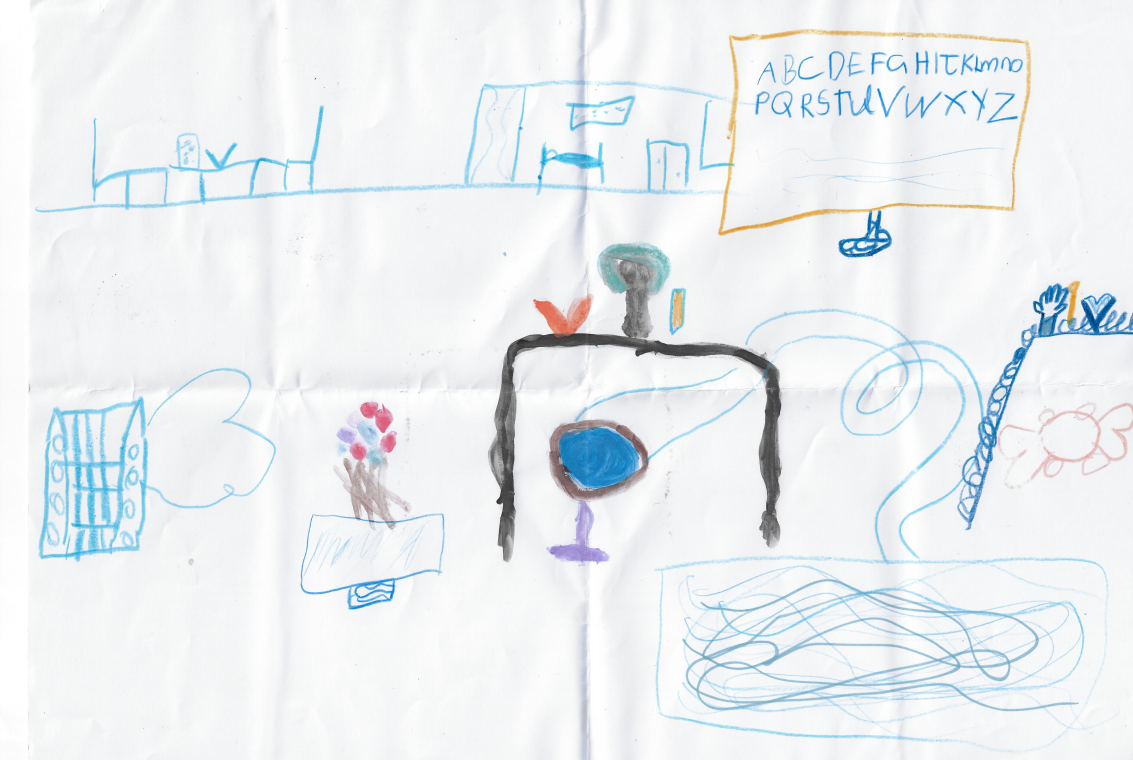
Craft/Picture Making is an art-based activity encouraging students to design their ideal class-room.
Reasonable adjustments
The provision of reasonable adjustments and personalised accommodations must be considered for successful inclusive practice to occur, and the research into how these reasonable adjustments are decided upon must be applied. Sharmar (2020), in their dissertation, looks directly at how to elicit student voice, however, does not address how specifically to include or support students to do this for themselves. Cefai and Cooper, (2010), along with researchers such as Hutzler et al., (2002) and Hart, (1992) examine the benefits of student voice. This is not in contention. What is required, is the look at how student voice can be ascertained from an early age and providing for best methods for varied communication.
The reasonable adjustments provided within the classroom setting tend to be teacher/adult led, despite policies and best practice being recognised as consulting the student. The student, as the main stakeholder, can be provided with ways to communicate their ideas and, when teachers, parents and service providers are creative in their ways to elicit responses, students are very capable of having voice in their own Individual Education Plans (IEP’s) and reasonable adjustments.
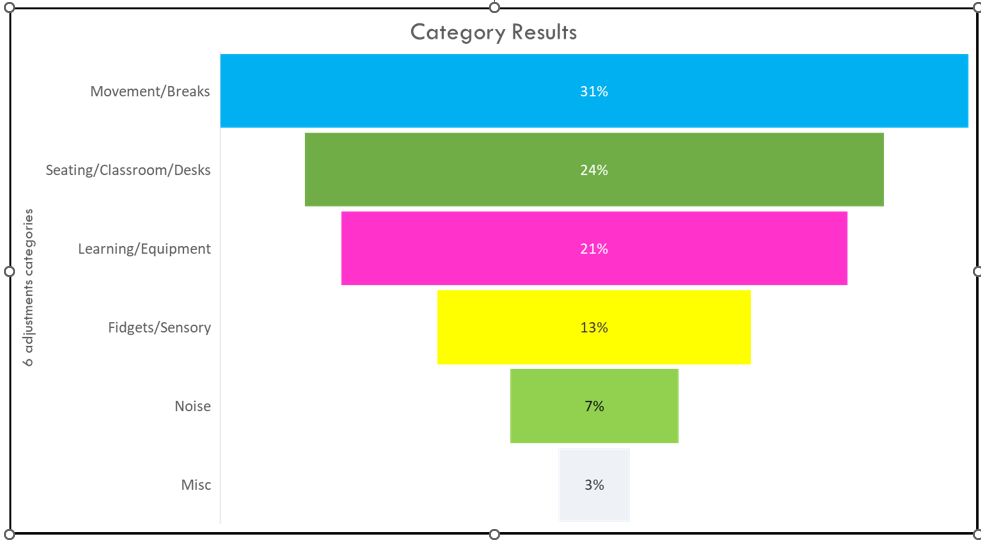
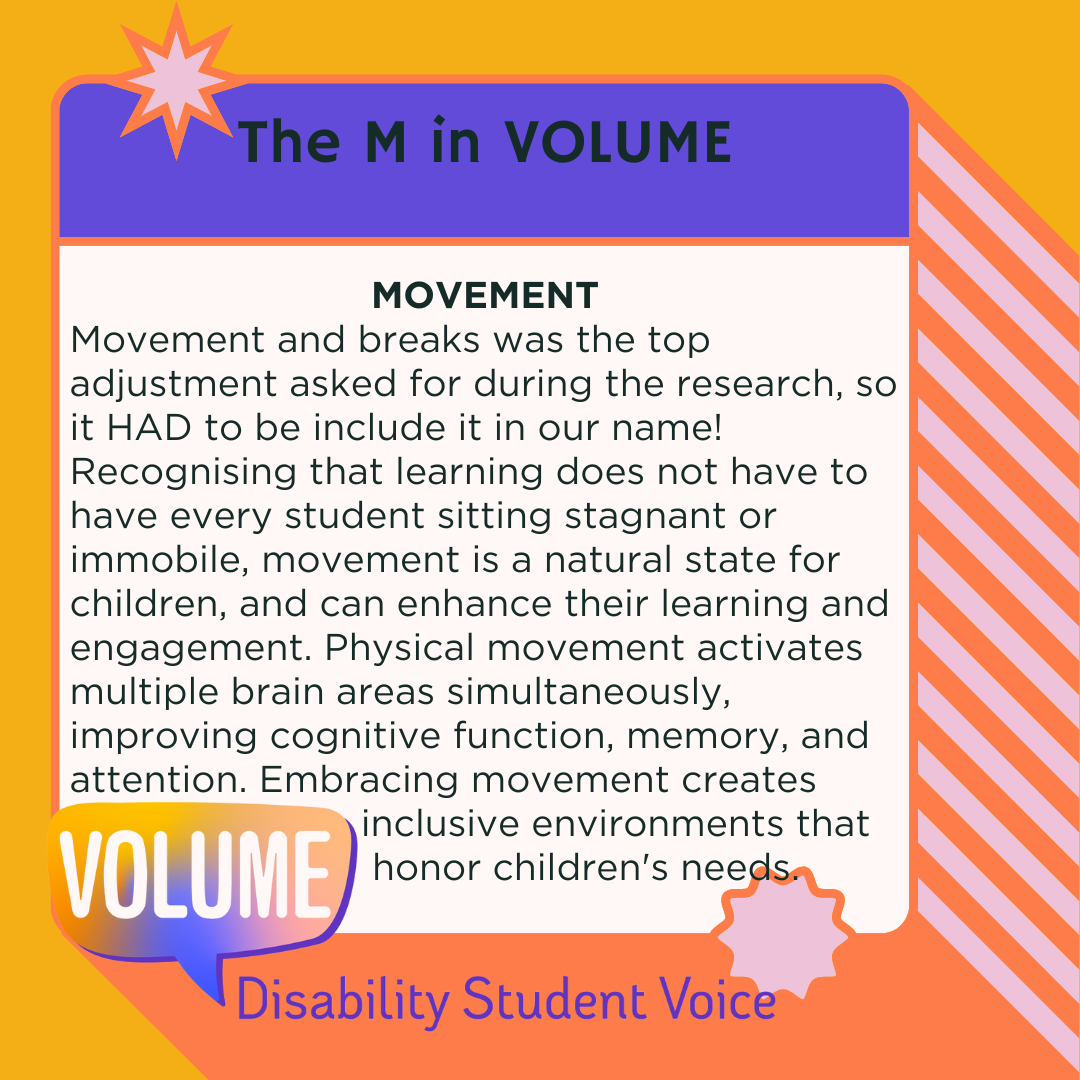
In this research, Movement and Breaks was the top chosen reasonable adjustment for students. The funnel graph below provides insight into the categories and their priority for the participants.